 |
Jacob Boehme's Christology and Modern Christian Views |
 |
|
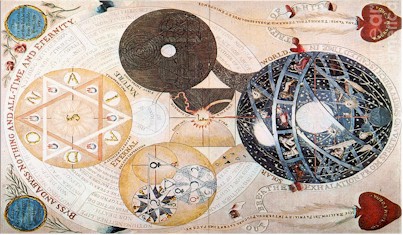
Jacob Boehme's Christology represents one of the most profound, esoteric, and speculative interpretations of Christ in the Christian tradition, emerging from 17th century German Lutheran mysticism but diverging sharply in its alchemical, theosophical, and cosmological framework. Boehme (1575 to 1624), a self-taught shoemaker and visionary, claimed direct divine illumination rather than academic theology. His views were condemned by Lutheran authorities as heretical during his lifetime and remain marginal in mainstream Christianity today. Yet they offer a dynamic, process-oriented vision of Christ that integrates creation, fall, redemption, and inner transformation in ways that contrast starkly with the more historical, doctrinal, and institutional emphases of modern Christianity. Modern Christianity is not monolithic; it spans evangelical Protestantism (emphasizing personal faith and biblical literalism), Roman Catholicism (sacramental and traditional), Eastern Orthodoxy (theosis and patristic continuity), liberal/mainline Protestantism (ethical and symbolic approaches), and charismatic or mystical fringes. "Modern" here generally refers to post-Enlightenment developments (18th to 21st centuries), shaped by historical criticism, science, secularism, and denominational diversity, while remaining anchored in Chalcedonian orthodoxy (two natures of Christ in one person) for most branches. Boehme's system, by contrast, is pre-modern in its mystical roots but anticipates Romanticism, Idealism, depth psychology, and even certain 20th century sophiological theologies. This comparison explores Boehme's Christology in depth --- its key doctrines, sources, and nuances --- then contrasts it point-by-point with modern Christian views. It covers similarities, divergences, historical context, implications, edge cases, and contemporary relevance, drawing on Boehme's own texts (e.g., The Incarnation of Jesus Christ and The Three Principles of the Divine Essence) and scholarly summaries. Boehme's Christology: Core Elements and Cosmological Context Boehme's thought revolves around the Ungrund (unground or abyss) --- God as primal, unmanifest freedom beyond being --- and a dynamic process of self-revelation through contraries (fire/wrath vs. light/love). Creation arises from seven "forms, properties or "spirits" of eternal nature, manifesting in three Principles: Dark/fire/wrath (Father's principle: astringency, bitterness, anguish --- source of Lucifer's fall and potential evil).
Christ (the eternal Word/Son) is the heart of this process: the self-revelation of the Deity, the "Tincture" that transmutes wrath into love. Key features include: Incarnation as Cosmic-Mystical Process: Not merely a one-time historical event in Bethlehem but the eternal Word becoming flesh to restore the divine image lost in Adam (and Lucifer before him). It involves three formations: (1) eternal generation of the Son in the Father; (2) birth as celestial man in the divine element; (3) terrestrial incarnation in Mary. Christ unites the three Principles in divine order without commingling, like fire illuminating iron. His soul is truly human (from Mary), not a foreign heavenly import, making redemption intimate and participatory. Sophia (Celestial Virgin/Divine Wisdom): Central and distinctive. Sophia is the eternal virgin of God's Wisdom --- the "bride" or feminine mirror of the Deity, not a fourth person of the Trinity but its self-revelation and substantiality. Adam was originally androgynous, containing Sophia; her loss (flying to heaven) led to the fall and Eve's emergence. In the incarnation, Sophia unites with Mary's soul (the "heavenly virgin" entering the earthly virgin matrix), clothing her in a pure heavenly garment. Christ is thus both Son of Mary and spouse of Sophia. Mary is not deified but the vessel where the dead essentiality (sulphur/flesh) is quickened. This introduces a divine-feminine dynamism absent in standard doctrine. Atonement and Redemption: Highly alchemical and inner. Christ conquers death/fire not primarily on the cross (though His suffering is essential) but through temptations (especially in the desert) and mystical descent into wrath's "torture-chamber" (centrum naturae). He introduces heavenly substantiality (divine blood/tincture) to quench the Father's wrath, raising the "virgin Adam" from death. Redemption is regeneration: the soul must "enter into Christ's death and resurrection" via faith as inner desire/imagination, birthing the new celestial man. External ceremonies or historical belief alone are insufficient --- "lip-Christians" fail; true faith is theosophical illumination where Christ lives within. Salvation and the True Christian: Everyone carries both Adam (fallen, wrathful) and Christ-potential. Regeneration produces a "new body" of divine substantiality. Boehme insists: "He alone is a true Christian whose soul and mind has entered again into the original matrix, out of which the life of man has taken its origin; that is to say, the eternal Word." The inner church is the temple of Christ; sects and dogmas are secondary. Boehme's system is theosophical (God-knowledge through inner vision) and draws on alchemy, Paracelsus, and Lutheran opposites (e.g., Luther's hidden/revealed God), but radicalizes them into a cosmology of eternal becoming. It was accused of pantheism, adding to the Trinity (via Sophia), and undermining external authority. Modern Christian Christology: An Overview Modern Christianity upholds the Nicene-Chalcedonian framework: Christ is fully divine and fully human, one person, two natures, without confusion or separation. Key emphases vary: Evangelical Protestantism: Historical Jesus as personal Savior; penal-substitutionary atonement (Christ bears God's wrath for sins); "born again" experience via faith-decision; literal resurrection and return. Focus on Scripture, individual conversion, and moral living. Divinity is ontological; salvation forensic (legal declaration). Roman Catholicism: Similar orthodoxy, plus sacramental realism (Eucharist as real presence of Christ); Mary as Theotokos (God-bearer), ever-virgin, Immaculate Conception (preserved from original sin) --- but human, not divine-feminine essence. Atonement often satisfaction or Christus Victor; salvation via grace through faith and works/sacraments. Eastern Orthodoxy: Strong emphasis on theosis (divinization --- participation in divine energies, not essence); incarnation as the means for humanity to become "gods by grace." Atonement as victory over death/sin; mystical union via liturgy, hesychasm, and sacraments. Patristic (e.g., Athanasius: "God became man so that man might become god"). Liberal/Mainline Protestantism: More functional Christology --- Jesus as ethical exemplar, prophet of the Kingdom, or symbol of divine love and human potential. Historical criticism demythologizes miracles/virgin birth; atonement often exemplary or moral influence. Divinity may be relational or symbolic rather than ontological. Social justice and experience over dogma. Across branches, Christology remains tied to history (incarnation -- 4 BCE to 30 CE), Scripture, and creeds. Esotericism, alchemy, or cosmic principles are rare outside fringes. Point-by-Point Comparison 1. Nature of Christ and the Trinity Boehme: Dynamic, processual Trinity emerging from Ungrund via fire/light contraries; Sophia as Wisdom-substantiality essential to revelation. Christ reconciles opposites alchemically.
2. Incarnation Boehme: Eternal/cosmic process; Sophia enters Mary's soul-matrix to quicken dead essentiality. Universal potential (Christ "becomes man" in every receptive soul).
3. Atonement and Role in Salvation Boehme: Mystical alchemy --- Christ enters wrath's fire, transmutes via love/tincture. Victory over temptation/death internally; cross as climax of inner conquest. Salvation = regeneration/new birth of celestial body via imagination/desire.
4. Faith, Experience, and the Church Boehme: Inner illumination; true Christian has Christ living within (theosophist vs. dogmatist). Outer church secondary.
5. Mary and the Divine Feminine Boehme: Mary embodies Sophia's incarnation; divine Wisdom as co-eternal feminine principle.
Similarities, Differences, and Nuances Similarities: Both affirm Christ's full divinity/humanity, incarnation for redemption, and inner transformation (regeneration parallels evangelical "new birth" or Orthodox theosis). Boehme's emphasis on Christ within resonates with mystical strands across traditions (e.g., Catholic contemplative prayer, Quaker inner light). His focus on love conquering wrath echoes Christus Victor motifs. Key Differences and Tensions: Boehme's cosmology is speculative and alchemical --- integrating evil's origin in divine nature's contraries --- which modern orthodoxy often sees as heterodox (risking dualism or emanationism). Modern Christianity prioritizes historical revelation and ecclesial authority; Boehme prioritizes direct illumination. Edge case: Boehme claimed fidelity to Luther but was expelled from Gorlitz; his works influenced radicals (Quakers, Ranters) and later philosophy (Hegel's dialectics, Jung's Self as reconciler of opposites) more than creedal churches. Implications and Contemporary Relevance: In a secular, pluralistic age, Boehme's inner mysticism offers depth amid doctrinal fatigue --- appealing to those disillusioned by institutionalism or seeking experiential faith (e.g., in Jungian therapy or eco-theology, where Sophia symbolizes creation's wisdom). It challenges modern rationalism by affirming cosmic redemption and divine feminine, potentially enriching feminist or process theologies. However, it risks subjectivism or syncretism (e.g., New Age appropriations). For evangelicals, it deepens "Christ in you" language; for liberals, it symbolizes ethical/spiritual progress; for Orthodox, it parallels theosis but requires patristic correction. Boehme highlights what institutional Christianity sometimes underemphasizes: the ongoing, transformative presence of Christ beyond dogma. In sum, Boehme's Christology is a mystical theosophy of divine self-revelation through opposites and inner rebirth, far more cosmological and participatory than the historically grounded, creedal Christ of most modern Christians. It remains a vital resource for those seeking esoteric depth within Christianity, even as it stands in productive tension with orthodoxy. Exploring Boehme invites readers to weigh external authority against inner illumination --- a perennial Christian dialectic.
|
|
Click HERE to read a summary of the major points from Basarab Nicolescu's book, "Science, Meaning, and Evolution: The Cosmology of Jacob Böhme" Click HERE to read a summary of the major points regarding The Cosmolology of Jacob Böhme" Click HERE to read a summary of the major points regarding The Christology of Jacob Böhme" Click HERE to read a summary of the major points regarding "A "Living Foundation" ** Christian Theology vs. Jacob Boehme" Click HERE to access a collection of videos and various writings of Jacob Boehme Click HERE to read: Chapter Six, "Jacob Boehme and the Evolution of Man", Lucifer's Action: Contemporary Resonances - |


